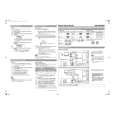
D:\###sagyou\08 gatu\0827-y\386760621CPD-G400\03ES02BAS-UC.fmmasterpage:Right
Paso 2: Conexión del cable de Paso 3: Encendido del monitor y
alimentacióndel ordenador
Con el monitor y el ordenador apagados, primero coPnecrimteroe e le canciblene da el monitor y, a continuación, el ordenador.
de alimentación al monitor y, a continuación, a una toma de
corriente.
(HD15)(HD15)La instalación del monitor ha finalizado.
12
Si fuese necesario, utilice los controles del monitor para ajustar la
AC INimagen.
Si las imágenes no aparecen en pantalla
? Compruebe que el monitor esté correctamente conectado al
ordenador.
? Si el mensaje SIN SENAL DE ENTRADA aparece en pantalla,
a AC
a una toma de confirme que el cable de senal de vÃdeo esté correctamente
IN
corriente
conectado y que todos los enchufes estén firmemente
conectados en las tomas.
? Si el mensaje MONITOR EN MODO AHORRO ENERGIA
Cable de alimentación
(suministrado)aparece en pantalla, pulse cualquier tecla del teclado del
ordenador.
? Si sustituye un monitor antiguo por este modelo y el mensaje
FUERA DEL RANGO DE AJUSTE aparece en pantalla,
vuelva a conectar el monitor antiguo. A continuación, ajuste la
tarjeta gráfica del ordenador de forma que la frecuencia
horizontal se encuentre entre 30 - 107 kHz, y la vertical entre
48 - 120 Hz.
Para obtener más información sobre los mensajes enES pantalla,
consulte ?Problemas y soluciones? en la página 17.
Para los usuarios que utilicen Windows 95/98
Para maximizar el potencial del monitor, instale en el PC el archivo de
información sobre el nuevo modelo del disquete Windows Monitor
Information Disk suministrado.
Este monitor cumple con el estándar Plug & Play ?VESA DDC?. Si el PC/
tarjeta gráfica cumple con DDC, seleccione ?Plug & Play Monitor (VESA
DDC)? o el nombre de modelo de este monitor como tipo de monitor en
el ?Control Panel? de Windows 95/98. Si el PC/tarjeta gráfica presenta
problemas de comunicación con este monitor, cargue el disquete
Windows Monitor Information Disk y seleccione el nombre de modelo de
este monitor como tipo de monitor.
Para los usuarios que utilicen Windows NT4.0
La instalación del monitor en Windows NT4.0 difiere de la utilizada en
Windows 95/98 y no implica selección de tipo de monitor. Consulte el
manual de instrucciones de Windows NT4.0 para obtener más
información sobre el ajuste de la resolución, frecuencia de barrido y
número de colores.
Ajuste de la resolución y del número de colores del monitor
Ajuste la resolución y el número de colores del monitor. Para ello,
consulte el manual de instrucciones del ordenador. El número de colores
puede variar de acuerdo con el ordenador o la tarjeta de vÃdeo. El ajuste
de la paleta de colores y el número real de colores son de la siguiente
forma:
? High Color (16 bit 65.t) 536 colores
? True Color (2t4 abiproxt) imadamente 16,77 millones de colores
En el modo True color (24 bits), la velocidad puede ser más lenta.
7
CPD-G400
3-867-606-21 (1) |

 ACEC
ACEC SONY
SONY