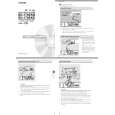
Setting digital audio connectionsConfirming the settings
to an AV amplifier or decoderThe [Exit Setup Navigator] is the final screen in the Setup
Navigator.
The [Digital Jack] screen establishes whether digital
connections have been made to an AV amplifier,
receiver, or external decoder. As there are numerous
Audio12 VideoLanguageGeneral
options available, please refer to the instructions
Setup Navigator
supplied with the component the player is connected to
Valid
to determine what digital audio formats can be decoded.
Exit Setup NavigatorInvalid
If you have made no digital connections, select ONotRedo
Confirm setup adjustments
Connected�.
MoveENTERSelectSETUPExit
Audio12 VideoLanguageGeneral
Setup NavigatorDolby Digital
Dolby Digital/DTS
Amp Connection Dolby Digital/MPEGSettings: Valid*
Digital JackDolby D/DTS/MPEG
PCMSelect to have the player make all of the
Not Connected
Compatible with Dolby Digitalnecessary audio, video and language settings
MoveENTERSelectSETUPExitaccording to your responses in the Setup
Navigator.
Invalid
Settings: Dolby Digital*SETTING UP THE PLAYER
Select to exit the Setup Navigator without
Dolby Digital/DTS
changing any of the system settings.
Dolby Digital/MPEG
Redo
Dolby D/DTS/MPEG
Select to return to the [OSD Language]
PCM
(Chinese model only) or the [TV Type] screen of
Not Connected
the Setup Navigator and do the settings again.
* Factory setting
* Factory setting
Note
The Karaoke function cannot be used with the DIGITAL OUT
jack.
To exit the Setup screen
When you have completed setting up the player using
the Setup Navigator or if you exit the Setup Navigator,
Setting compatibility with 96 kHz
the Setup screen General menu appears. Press Setup
outputto close the Setup screen.
The [96 kHz PCM Audio] screen establishes whether or
not the AV component the player is connected to isTo change other player settings in the Setup
capable of processing an audio signal with a sampling
screen menus
rate of 96 kHz. This screen only appears if connections
The procedure for changing the settings in the Setup
have been made to an external AV component as
screen menus is described on page 26.
determined in previous screens.
Audio12 VideoLanguageGeneral
Setup Navigator
Amp Connection No
96 kHz PCM AudioYes
Don't Know
Digital jack not compatible with 96 kHz
MoveENTERSelectSETUPExit
Settings: No*
Select if the connected AV component cannot
process an audio signal with a sampling rate of
96 kHz.
Yes
Select if the connected AV component can
process an audio signal with a sampling rate of
96 kHz.
DonOt Know
Select if you are uncertain whether the
connected AV component can process an
audio signal with a sampling rate of 96 kHz.
* Factory setting
21 |

 ACEC
ACEC PIONEER