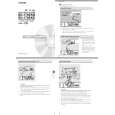
GM-X922, GM-X1022
Fig. 22Fig. 23
Mid-high (Left)Woofer (Mono)Mid-high (Right)High/mid-high (Left)Mid/mid-bass (Left)Woofer/sub-woofer (Mono)Mid/mid-bass (Right)High/mid-high (Right)
C1L1C1C1C2L1C2
L2L2
act as low-pass filters. Capacitors (C1 and C2 in the diagrams) act as high-pass filters. Inductors (L) are used for the woofer/sub-woofer,and capacitors (C) are used for the high/mid-high.will see only half of the original speaker impedance. Therefore,you must use speakers that have ratings of 4 ohms or higher. If you use speakers that have lower impedance ratings it may cause damage to the amplifier.connected to the speaker wires,secure or solder them so they cannot be pulled loose. Tape or use heat shrink on the joints to prevent short circuits.
YInductors (L1 and L2 in the diagrams)YRemember when bridging an amplifier itYWhen the inductors and capacitors are
Three-channel mode,two-way systemThree-channel mode,three-way system
Fig. 20Fig. 21
(Left) Speaker (Right)Speaker(Mono)
connect the RCA output.connect the speaker input.
The speaker output mode can be two-chan- nel (stereo),one-channel (mono),or three- channel (stereo + mono). Connect the speaker leads to suit the mode according to figures on the following pages.YWhen connecting to the speaker input,do notYWhen connecting to the RCA input,do notThe power amplifier is basically a two- channel/one-channel bridgeable amplifier, but three channels can be achieved by combining the stereo and mono modes using inductors and capacitors.
Connecting the Speaker wiresTwo-channel mode (stereo)One-channel mode (mono)Three-channel mode (stereo + mono)
Fig. 16Fig. 17Fig. 18Fig. 19
Twist
Terminal cover
Speaker wire
10mm
LugSpeaker wire
nal screws.nect the terminal
by about 10 mm and twist using nippers or a cutter.Lugs not supplied.YUse pliers,etc.,to crimp lugs to wires.speaker output terminals.YFix the speaker wires securely with the termi-YAfter pass through the terminal cover,con-
Terminal screwSpeaker output terminal
Connecting the Speaker Output Terminals1.Expose the end of the speaker wires2.Attach lugs to speaker wire ends.3.Connect the speaker wires to the4.Cover the terminals.
22 |

 ACEC
ACEC