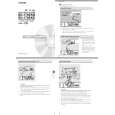
5. Pattern modeaaaaaaaaaaaaaaaaaaaaaaaaaaaaaaaaaaaaaaaaa
Registering a pattern for
Pattern Set
Pattern Set is a function that lets you assign your favorite pat-Pattern Set
terns to each of the sixteen step keys, and switch them at the
1. With playback stopped, continue pressing the Pattern Set key
touch of a key.
(or Hold it) and press the step key for the location that you
During playback, you can successively switch patterns to per-
wish to register.
form a song.
By using the Select key in conjunction with this to switch pat-2. While continuing to press the Pattern Set key (or while Hold
tern set groups, you can register and select 16 � 4 (total of 64)is still in effect), rotate the dial to select the pattern number
patterns.that you wish to register. Release the Pattern Set key (or de-
feat Hold) to complete the registration process.
Using Pattern Set to perform3. To save the pattern set registrations, press the Stop/Cancel
key to stop playback. Continue pressing the Pattern Set key,
(Pattern Set Play)and press the Write key (the Write key will blink).
Press the Play/Pause key to begin playback.4. The display will blink "PSt." Press the Write key once again
Hold down the Pattern Set key and press a step key to switch toto save the data.
the pattern that was registered for that step key.
To cancel, press the Stop/Cancel key.
By holding down the Pattern Set key and pressing a Select key,
you can switch to a different group of registered pattern sets.If the Global mode Memory Protect setting is on, it will
The pattern set group will be indicated by the lower line of thenot be possible to write the data. In this case, turn off the
Select LEDs (red).Global mode Memory Protect setting before you execute
By holding down the Shift key and pressing the Pattern Set key,the Write operation.
you can hold the Pattern Set function (the key will light).
Never turn the power off during the Write operation. This
To defeat the Hold condition, press the Pattern Set key once
may damage the data.
again (the key will go dark).
2
Example
Step key
1 2 3 4 5 14 15 16
Select LED
1A01 A30 B03 B04 A51 A31 B43 B61
2B21 B23 B56 B64 B28 B21 A07 A08
3B01 B02 B04 B62 A04 A05 A45 A64
4A11 A12 A13 A14 A15 A24 A25 A26
3,4
Pattern set 1Pattern set 31
1,2
Hold down the Shift key and
press the Pattern Set key to
hold the function
In Pattern Set Play, the timing at which patterns will change,
tempo adjustment, and functions such as Reset & Play etc. are
the same as for Pattern Play.
Pattern Set cannot be used during recording. When you
enter recording (ready) mode, Pattern Set will be can-
celled.
46 |

 ACEC
ACEC