Guided Tour - E62i / E31i / E30i
Front Panel
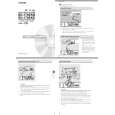
5: Bypass switches- When pressed in, the corresponding Bypass LED lights red andENGLISH
the equalization circuitry is made inactive so that the signal passes through unaffected,
regardless of the settings of the Equalizer sliders. When out (in the up position), the corre-
sponding Bypass LED lights green and the E62iequalization circuitry affects the signal as
per the setting of the front panel Equalizer sliders (see #1 on the previous page for more
information). In the E62iand E30i, independent Bypass switches are provided for each of
the two channels (Channel A and Channel B).
6: ?12 dB switches- When pressed in, the corresponding LED lights and the Equalizer
sliders cut or boost each frequency area by up to 12 dB, allowing coarse frequency curves
to be set. When out (in the up position), the Equalizer sliders cut or boost each frequency
area by up to 6 dB, allowing finer control and gentler frequency curves to be set. See #1
on the previous page for more information. In the E62iand E30i, independent ?12 dB
switches are provided for each of the two channels (Channel A and Channel B).
7: Cut Only switches- When pressed in, the corresponding LED lights and all the
Equalizer sliders serve to attenuate their frequency areas only (there is no boost) by up to
6 or 12 dB, depending upon the setting of the ?12 dB switch (see #6 above). The Cut Only
switch should be used when you need to notch out certain frequencies in order to reduce
feedback or Oring out� a room. See the ORinging Out A Monitor System� section in this
manual (page 17) for more information. In the E62iand E30i, independent Cut Only dB
switches are provided for each of the two channels (Channel A and Channel B).
8: HPF (High Pass Filter) switches- When pressed in, the corresponding LED lights
and an 80 Hz highpass filter is applied to the signal, effectively removing rumble and other
low frequencies. In the E62iand E30i, independent HPF dB switches are provided for
each of the two channels (Channel A and Channel B).
7 |

 ACEC
ACEC