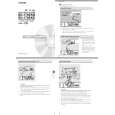
DRYER USE
5. (OPTIONAL) Your dryer may have a WRINKLE PREVENT
setting. When you are unable to remove a load from the dryer
Starting Your Dryer
as soon as it stops, wrinkles can form. This feature
periodically tumbles, rearranges and fluffs the load without
heat to help avoid wrinkling.
WARNING
6. (OPTIONAL) Your dryer may have an End of Cycle Signal as
part of the Push To Start button. This signal is helpful when
drying items that should be removed from the dryer as soon
as it stops. Turn the PUSH TO START button to ON or OFF.
The signal will sound only if the selector is set to On.
7. If desired, add fabric softener sheet. Follow package
instructions.
Explosion Hazard8. Press PUSH TO START.
Keep flammable materials and vapors, such as
Stopping and Restarting
gasoline, away from dryer.
You can stop your dryer anytime during a cycle.
Do not dry anything that has ever had anything
To stop your dryer
flammable on it (even after washing).
Open the dryer door or turn the Cycle Control knob to OFF.
Failure to follow these instructions can result in death, NOTE: The Cycle Control knob should point to an Off area when
explosion, or fire.the dryer is not in use.
To restart your dryer
Close the door. Select a new cycle and temperature (if desired).
Press PUSH TO START.
WARNING
How Automatic Drying Works
During the Automatic Drying Cycle, the exhaust temperature of
the dryer determines the drying time and dryness levels. A
thermostat signals the Cycle Control knob when to move into
Cool Down. The drying time for an Automatic Drying Cycle
depends on load type and load size. When you are drying a large
or heavy load, the Cycle Control knob may take a long time before
Fire Hazard
it begins to advance into Cool Down. Automatic Drying Cycle
takes the guesswork out of drying time and enhances fabric care.
No washer can completely remove oil.
The amount of time that is displayed is the estimated time
Do not dry anything that has ever had any type of oil on remaining in the cycle.
it (including cooking oils).
Items containing foam, rubber, or plastic must be dried Drying Rack Option
on a clothesline or by using an Air Cycle.Use the Drying Rack to dry items such as sweaters and pillows
without tumbling. The drum turns, but the rack does not move.
Failure to follow these instructions can result in death
If your model does not have a drying rack, you may be able to
or fire.
purchase one for your model. To find out whether your model
allows drying rack usage and for information on ordering, please
refer to the front page of your manual or contact the dealer from
WARNING: To reduce the risk of fire, electric shock, or injury to
whom you purchased your dryer.
persons, read the IMPORTANT SAFETY INSTRUCTIONS before
operating this appliance.NOTE: The rack must be removed for normal tumbling. Do not
use the automatic cycle with the drying rack.
This booklet covers several different models. Your dryer may not
have all the cycles and features described.To use the drying rack
Before using your dryer, wipe the dryer drum with a damp cloth to 1. Place drying rack in dryer.
remove dust from storing and shipping.Style 1: Your drying rack has front legs. Slide rear pegs into
1. Clean lint screen before each load. See ?Cleaning the Lint the dimples on the back wall of the dryer. Lower the front legs
Screen.?to rest on the dryer opening.
2. Load clothes loosely into the dryer and close the door. Do not Style 2: Your drying rack does not have front legs. Do not
pack the dryer. Allow space for clothes to tumble freely.remove the lint screen. Slide drying rack over the bottom of
the dryer door opening. Push down to secure rack on frame.
3. Turn the Cycle Control knob to the recommended cycle for the
type of load being dried. Use the Energy Preferred Automatic
Setting to dry most heavy to medium-weight fabrics.
4. (OPTIONAL) If your dryer has a Temperature selector, set it to
the recommended setting for the type of fabric being dried.
See Dryer Cycle Descriptions (separate sheet) for temperature
suggestions. On some models, temperature is included in the
cycle selections.
4 |

 ACEC
ACEC