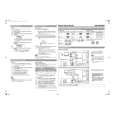
B3/B328/B3158 Bass Amplifier
The Front Panel Controls and Their Use
7. ULTRA-MEDIANOS: Este es el control primorrefuerzo ni recorte). Estos controles s-?lo afectan ellimitador est? impidiendo el aplanamiento (Oclip-
dial para el rango de las frecuencias medianas. Giresonido cuando el EQ esŽ prendido.ping�) de la se-al de salida.
el control del centro hacia la izquierda para lograr
11. MAESTRO: Fije mediante este control el nivelNOTA: Hay dos circuitos Limitadores dentro del
un sonido de contorno (m?s distante, menor salidageneral de salida del amplificador. El Circuito deB3158: uno para su amplificador de potencia de
en el rango mediano) ? del centro hacia la derechaEfectos y la Salida Equilibrada (#19, 20, 23) no sefrecuencias bajas y otro para su amplificador de
para obtener un sonido realmente penetrante.ver?n afectadas por el control Maestro. Jalando elpotencia de frecuencias altas. Todos los dem?s
8. AGUDOS: Esta perilla sirve como el control pricontrol Maestro se prende el EQ Gr-?fico (#10).modelos tienen un solo circuito Limitador, y por lo
mordial para las frecuencias altas. Esto permite unCuando se utiliza el interruptor de pie, se pasa portanto un solo LED de Limite.
rango de 17dB de refuerzo ? 22dB de recorte aalto el interruptor del panel delantero.14. DIODO LED DE POTENCIA ENCENDIDA:
5kHz.12. EQUILIBRIO (SOLO EN EL B358):Este con-Este LED indicador se ilumina cuando se prende el
9. EQ EN LED: Este dÃodo LED indicador se ilutrol var-?a el nivel de la se-al entre las salidas deinterruptor de Potencia (#15).
mina cuando usted activa el EQ mediante el controlbajas y altas frecuencias (vŽase el #18) para ade-
15. INTERRUPTOR DE POTENCIA: Este interrup-
Maestro (#14) del panel delantero ? el interruptor decuar a�n m?s el sonido).tor de servicio pesado tipo vaivŽn aplica la energ?a
pie (#24) del panel posterior.13. DIODOS LED DE LIMITE:Este LED indicadorde CA al amplificador: el amplificador se PRENDE
10. EQ GRAFICO: Estos controles deslizantesparpadear? cada vez que se requiera el circuito limen la posici?n hacia arriba (-OI�), y se APAGA en la
(cursores) le permiten ajustar la salida de las freitador interno para conservar limpia la se--al de salposici-?n hacia abajo
cuencias que se muestran junto a cada control. Laida del amplificador. Esto indica que el amplificador
posici?n central de cada control es plana (sinest? aproxim?ndose a su salida m?xima y que el
The Rear Panel
CAUTIONMODELB-3158
RISK OF ELECTRIC SHOCKDO NOT OPEN
AVIS:RISQUE DE CHOC ELECTRIQUENE PAS OUVRIRSERIAL #
WARNING: ELECTRIC SHOCK, SO NO EXPOSE THIS EQUIP-TO REDUCE THE RISK OF FIRE OR 500 WATTS MAX.
FOR 100-120VAC, 50/60Hz: T5A, 250VMENT TO RAIN OR MOISTURE.115VAC-60Hz
FOR 220-240VAC, 50/60Hz: T2.5A, 250V
SPEAKERSEFFECTS
LOOPPOST
PRE
-20dB
HIGHLOW0dB
50 WATTS100 WATTSRETURNSEND
@8 OHMS@4 OHMSBAL.FOOT
8 OHM MIN.4 OHM MIN.OUTSWITCH
1617181920 2122 2324
16. FUSE:This protects the unit from dam-output signal between the low and high fre-The following chart shows the total
age due to overload conditions or powerquency output jacks. Observe the minimumimpedance load when connecting speaker
line surges. In case of failure, replace it onlyimpedance ratings for each output (8 ohmscabinets in parallel:
with the same size and type.for high, 4 ohms for low).
Cabinet# ofTotal
17. AC LINE IN:Firmly insert the suppliedThe B3 has a single speaker output jack
ImpedanceCabsImpedance
AC power cord into this socket until it is fully(wired at the factory to its speaker enclo-
8&24&
seated. Plug the male end of the cord into asure). To use an external speaker cabinet,
16&28&
grounded AC outlet. DO NOT DEFEATdisconnect the amplifier from the enclosure
16&44&
THE GROUND PRONG OF THE ACand connect it to the external cabinet, using
PLUG!a speaker cable with 1/4� plugs. Observe
18. SPEAKER OUTPUT(S):This section isthe 4 ohm minimum impedance rating.19. EFFECTS RETURN:To use an external
different for each of the three models. The B328 has a single speaker outputTheeffects device or other signal processor,
B3158 is shown in the illustration above. jack, and two input jacks on its speaker cab-connect the OUTPUT of the device to this
inet: WITH TWEETER and WITHOUTjack using a shielded cable. This returns the
The B3158 has two internal amplifiers,
TWEETER. Connect the speaker cable toprocessed signal into the amplifierOs master
one for the high frequencies, one for the
low. Each amplifier section has its ownthe jack which gives you the best sound. section.To
speaker output jack, factory-wired to theuse an external speaker cabinet, discon-20. EFFECTS SEND:Connect the output
internal speakers. To use external speakernect the amplifier from the enclosure andfrom this jack to the INPUT of an external
cabinets, unplug the connectors from theconnect it to the external cabinet, using aeffects device using a shielded cable. This
speaker cable with 1/4� plugs. Observe the
jacks and use speaker cables with 1/4�sends a post-EQ signal to your effects.
4 ohm minimum impedance rating.
plugs to connect the LOW jack to your lowSince plugging a cable in here does not
frequency cabinet and the HIGH jack to thebreak the through connection to the power
high frequency cabinet. Use the Balanceamp, this jack can also be used as an
control (#12, front panel) to proportion theunbalanced line out jack.
4 |

 ACEC
ACEC OTHERS