Model 803A Sect. Ill Page 9
n
I r-+l
$lOOQ
TO
200a BALANCED BALANCED
----- -----
803A
BRIDGE
50 50 a a
IMPEDANCE IMPEDANCE RATIO RATIO 4:l 4:l
VOLTAGE VOLTAGE RATIO RATIO : : 2; 2; I I
ELECTRICAL ELECTRICAL LENGTH LENGTH
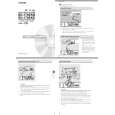
Figure Figure 3-7. 3-7. Simple Simple Balun Balun to to Operate Operate from from Balanced Balanced System System
a
3-10 VSWR MEASUREMENT 3-11 MEASURING BALANCED IMPEDANCES
VSWR of a system under test can be determined A type of measurement often required is the meas-
with a single impedance measurement plotted on urement of balanced impedances, such as balanced
the Z- 8 chart. The procedure is as follows: antennas fed by a balanced transmission line.
Since the UNKNOWN terminal on the Model 803A
1) Plot the bridge reading, frequency corrected,
operates at ground potential it is a single ended
on the Z-8 chart. Zo = 50 52.
instrument, and a balancing device is required
2) Construct a constant VSWR circle, centered in when measuring balanced unknown impedances.
the middle of the chart, which passes through the
plotted impedance point. Scribe this circle until
it intersects the right hand horizontal axis of the A suitable device for converting balanced to un-
chart. balanced systems is the balun shown in Figure
3-7. The balun is cut exactly one-half wave-
3) The VSWR is given by the value of the intercept
length long at the operating frequency so that the
point divided by 50 ohms.
voltage at the input to the balun will be reproduced
In transmission line systems other than 50 ohms, out of phase at the load end of the balun. The balun
the normalized Z-8 chart is used,(Zo =l). The effectively drives one-half the load while the
procedure is the same as that described above bridge drives the other half, making the voltage
except the measured impedance is normalized by across the load equal to twice the voltage delivered
dividing it by the characteristic impedance of the by the bridge. This system is generally equivalent
system and then plotted on the chart. A circle to a 1:2 voltage transformer, or a 1:4 impedance
with its center at the middle of the Z-8 chart is transformer. Readings made by the bridge will
scribed through the plotted impedance point. The be one-fourth of the actual impedance magnitude of
intercept of this circle with the right side of the the load. Phase angle measurements theoreti-
horizontal axis gives the VSWR directly. cally are not transformed by the balun. |

 ACEC
ACEC