Preparation
Using a battery pack made bUsing the NP-1B batteryy pack
Anton Bauermade by Sony
Before use, charge the battery pack using the exclusive batteryBefore use, charge the battery pack using the exclusive battery
charger made by Anton Bauer.charger made by Sony.
For the charging time and other details, refer to the operatingFor the charging time and other details, refer to the operating
instructions of the battery charger used.instructions of the battery charger used.
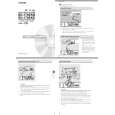
Attach the battery pack made by AntonRemove the battery holder.
11
Bauer.
Refer to step 1on page 10.
Power output connector for lighting
Attach the battery made by Sony to the
2
Battery pack made by Anton Bauerunit.
Battery case
2
4
Lighting control switchCover
<Reference>
A battery holder made by Anton Bauer is equipped with a power3
output connector for the lighting and a lighting control switch to5
1
enable a light to be easily attached. For details on the lighting
systems available, contact Anton Bauer.MountingScrew provided
with mounting
connector forHole
NP-1Bconnector for
NP-1B
Insert the battery pack and slide it in the
2
direction of the arrow.
First, remove the battery holder cover.
1 Attach the mounting connector for the NP-1B.
2 Use the mounting screws to mount the battery case.
3 Tighten the screw for the power supply contact.
4 Insert the top of the cover in the direction of the arrow.
5 Align the hole in the bottom of the cover (metal part) with the
hole in the bottom of the battery case, and attach using the
screw provided with mounting connector for NP-1B.
2
Set the battery type.
3
Release leverSelect the battery type using <BATTERY> on the sub-menu
screen.
<Reference>Select ONiCd12� if the NP-1B is to be used. (See page 36)
To remove the battery pack, slide it in the opposite direction to the
one in which it was attached while keeping the release lever on the
battery holder pulled down all the way.
Set the battery type.
3
Select the battery type using <BATTERY> on the sub-menu
screen.
Example:Select ONiCd13� if the TRIMPAC13 is to be used;
select ONiCd14� if the TRIMPAC14 is to be used.
(See page 36)
11 |

 ACEC
ACEC