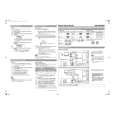
4. Lorsque la charge est terminée, le
témoin de charge se met a clignoter
rapidement en vert.
5. Si le voyant de charge ne s?allume pas
immédiatement apres le branchement
du chargeur ou, si apres la durée de
3. Pendant la charge, le témoin s?allume.charge standard, le voyant ne s?éteint
pas, consultez un revendeur agréé pour
Lorsque la charge est terminée, un inter-
rupteur électronique s?actionne pour pro-de l?assistance technique.
téger la batterie.6. Si une batterie completement char-
? La charge ne peut pas tre ralise gée est a nouveau insérée dans
si la batterie autonome est chaude le chargeur, le témoin de charge
(par exemple, la suite d?un long s?allume. Apres quelques minutes,
travail de perage).le voyant de charge risque de cligno-
Le témoin d?attente orange clignote ter rapidement pour indiquer que la
charge est termine.
jusqu?a ce que la batterie se soit
refroidie. La charge commence
alors automatiquement.
INDICATION DU VOYANT
Allum en vert
Le chargeur est branché dans la prise secteur.
Pret pour la charge.
Clignotant rapidement en vert
Chargement termin. (Pleine charge)
Clignotant en vert
La batterie est charge environ 80%. (Charge utile. Li-ion
seulement)
Allum en vert
Chargement en cours.
Allum en orange
La batterie autonome est froide
La batterie autonome est chargée lentement pour réduire
leffort de la batterie. (Li-ion seulement)
Clignotant en orange
La batterie autonome est chaude. La charge commence
lorsque la temprature de la batterie autonome descend.
Lorsque la température de la batterie autonome est de -10oC
ou moins, le témoin de charge (orange) se met également a
clignoter. La charge commence lorsque la température de la
batterie autonome augmente (Li-ion seulement).
Tmoin de ltat de charge
Gauche: vert Droite: orange safchent.
Clignotant rapidement en orange et en vert
Impossible de charger. Colmatage par la poussire ou mau-
vais fonctionnement de la batterie autonome.
- �6 -
EY7440(UL).indb 262006/09/13 9:40:02 |

 ACEC
ACEC