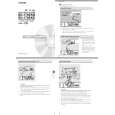
Optional automatic ice maker.. . l It is normal for ice crescents to be attached by a
If you have the automatic ice maker accessory or corner. They will break apart easily.
l You will hear water running when ice maker is
plan to add one later (Part No. ECKMF-62). there are a
working. You?ll hear ice fall into the bin. Don?t let
few things you will want to know:
these sounds bother you.
l The ON /OFF lever is a wire signal arm.
l The ice maker will not operate until the freezer is
Down. .for making ice automatically; cold enough to make ice. This can take overnight.
Up...toshut off the ice maker. 0 Because of new plumbing connections, the first
l Shake the bin occasionally to keep cubes sepa- ice may be discolored cf off-flavored Discard the
rated, and to obtain increased storage capacity. first few batches of ice.
l If ice is not being made fast enough and more ice
is needed, turn the Temperature Control toward a
higher number. Wait a day and, if necessary, turn
the Air Control toward A.
l If you remove the ice bin, raise the signal arm to
shut off the ice maker. When you return the bin,
push it all the way in and lower the arm to the ON
position.
l If cubes are stored too long, they may develop an
off-flavor...like stale water. Throw them away. They
Raise Signal will be replaced. Cubes in the ice bin can also
Arm to Start It. Arm to Stop Ice Maker. become smaller by evaporation
l Good water quality is important for good ice quality
It is not recommended that the ice maker be con-
nected to a softened water supply Water softener
chemicals such as salt from a malfunctioning soft
ener can damage the ice maker mold and lead to
poor quality ice. If a softened water supply cannot
be avoided, then it is important that the water soft-
ener be well maintained and operating properly
Sounds you may hear...
Your new refrigerator may make sounds that your old one didn?t.
Because the sounds are new to you, you might be concerned about
them. Don?t be, Most of the new sounds are normal. Hard surfaces like
the floor, walls and cabinets can make the sounds seem louder.
P The following chart describes the kinds of sounds that might be new
3 ? SF-- to you. and what may be making them.
Possible Sounds: Probable Causes:
l Slight Hum, Soft Hiss: You may hear the refrigerator?s fan motor and moving air.
l Clicking or Snapping The defrost timer makes a definite click when the refrigerator stops running. It
Sounds: also makes a sound when the refriaerator starts.
l Water Sounds: When the refrigerator stops running, you may hear gurgling in the tubing for a
few minutes after it stops. You may also hear defrost water running into the
defrost water pan.
w-m-
l Ice Maker Sounds: If your refrigerator has an ice maker, you may hear buzzing (from the water
-trickling water valve], trickling water and the clatter of ice dumped into the bin.
-thud (clatter of ice)
l Running Sounds: Your refrigerator has-a high-efficiency crgpressor and motor. It will run lo=
than older designs. It may even seem to run most of the time.
Energy saving tips...
You can help your refrigerator use less electricity. l It IS a waste of electrrcity to set the refrigerator and ,
l Check door gaskets for a tight seal. Level the cabi- freezer to temperatures colder than they need to
net to be sure of a good seal. be. If ice cream is firm in the freezer and drinks are
l Clean the condenser coil regularly. as cold as your family likes them, that?s cold enough.
l Open the door as few times as possible Think about l Keep the Power Saving Control on OFF unless
what you need before you open the door, Get moisture forms on the refrigerator exterior.
everything out at one time. Keep foods organized l Make sure your refrigerator is not next to a heat
so You won?t have to search for what you want. source such as a range, water heater, furnace, radi-
Close door as soon as food is removed. ator, or in direct sunlight.
l Go ahead and fill up the refrigerator, but don?t over-
crowd it so air movement is blocked.
8 |

 ACEC
ACEC