Frozen food storageMaking ice cubes
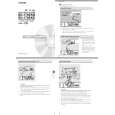
Door reversal directions
The appliance is provided with one or more trays for
When you first start the freezer or if the freezer has
ice-cubes trays.
1. Disconnect from the electricity supply.been out of use for some time, we advise you to
�depress the ambient switch for at least two hoursFill the tray(s) 3/4 full to give the ice space to expand2. Remove all loose items, including food, store food
before storing frozen food.and place them in the freezer compartment.
in a cool place.
Do not exceed the storage period indicated by theTo release the ice cubes simply give the tray a slight
3. Gently lay the fridge/freezer on its back with the
�manufacturer.twist.top held away from the floor by 5-8 cm (2-3
inches) of packing;Finally, do not open the door frequently or leave itDo not use sharp or metallic instruments to remove
�
open longer than is absolutely necessary.the trays from the freezer.
4. Remove the feet (B)
������� �
�
5. Remove bottom hinge (A).
WarningFresh food refrigeration
6. Remove the freezer door by releasing it from the
middle hinge (H).Do not put carbonated liquids, (fizzy drinks etc.), inTo obtain the best performance, do not store warm
the freezer compartment.food or evaporating liquids in the refrigerator; do
7. Unscrew the middle hinge.
cover or wrap the food, particularly if it has a strong
�Ice lollies, if consumed immediately after removal
8. Slide out the fridge door from pin (G), unscrew
flavour.
from the freezer, can cause low temperature skin
the latter and then screw it down into the hinge-
burns.Do not cover the shelves with any protective
blade provided on the opposite side, after having
removed the small plugs (I) which should then beDo not remove items from the freezer if your handsmaterial, such as paper, cardboard or plastic, which
may obstruct the air circulation through them.
fitted on the opposite side.are damp/wet, as this could cause skin abrasions or
�frost/freezer burns�.To help you use your refrigerator correctly, here are
9. Refit the fridge door and replace the middle hinge
to the left hand side.some more useful hints:
ThawingRaw meat (beef, pork, lamb & poultry or chicken):
10.Replace the door and bottom hinge (A) on the
wrap in polythene bags and place on top of the salad
opposite side.
Frozen food, prior to being used, can be thawed in
crispers.
11.Refit the feet (B) on the opposite side.the fridge or at room temperature depending on the
Meat can only be stored safely in this way for
time available. Small food items may even be cooked
one or two days at the most.
from frozen; in this case cooking will take longer.
Fruit & vegetables: these should be thoroughlyAny frozen food which is allowed to thaw accidentally
Attentioncleaned and placed in the bottom salad crispers.
should either be eaten as soon as possible or thrown
�
After completion of the door reversing operation,away. Alternatively, if the food is uncooked and hasButter & cheese: these should be placed in special
check that the door gasket adheres to the cabinet. Ifnot been completely defrosted it can be cooked andairtight containers or wrapped in aluminium foil or
the ambient temperature is cold (i.e. in Winter), thethen refrozen.polythene bags to exclude as much air as possible.
gasket may not fit perfectly to the cabinet. In thatMeat, fish and fruit should be thawed in theMilk bottles: these should have a cap and should be
case, wait for the natural fitting of the gasket orrefrigerator compartment and small pieces of meat
stored in the bottle rack on the door.
accelerate this process by heating up the partcan even be cooked while still frozen, but you must
involved with a normal hairdryer on a low setting.ensure that it is thoroughly cooked through.
Vegetables should be directly immersed in boiling
Normal Operating Sounds
water; ready-cooked dishes can be placed directly in
�the oven in their aluminium wrapping." You may hear faint gurgling or bubbling sounds
when the refrigerant is pumped through the coils
A microwave oven is particularly suitable for thawing
or tubing at the rear, to the cooling
any type of frozen or deep-frozen food: follow the
plate/evaporator or to the fixed freezer shelves.
oven instructions, particularly regarding the
placement of aluminium wrapping or containers in" When the compressor is on, the refrigerant is
�the oven.being pumped round, and you will hear a whirring
sound or pulsating noise from the compressor.
Defrosted cooked food must never be refrozen.
" A thermostat controls the compressor, and you
�
will hear a faint �click� when the thermostat cuts in
and out.
165 |

 ACEC
ACEC